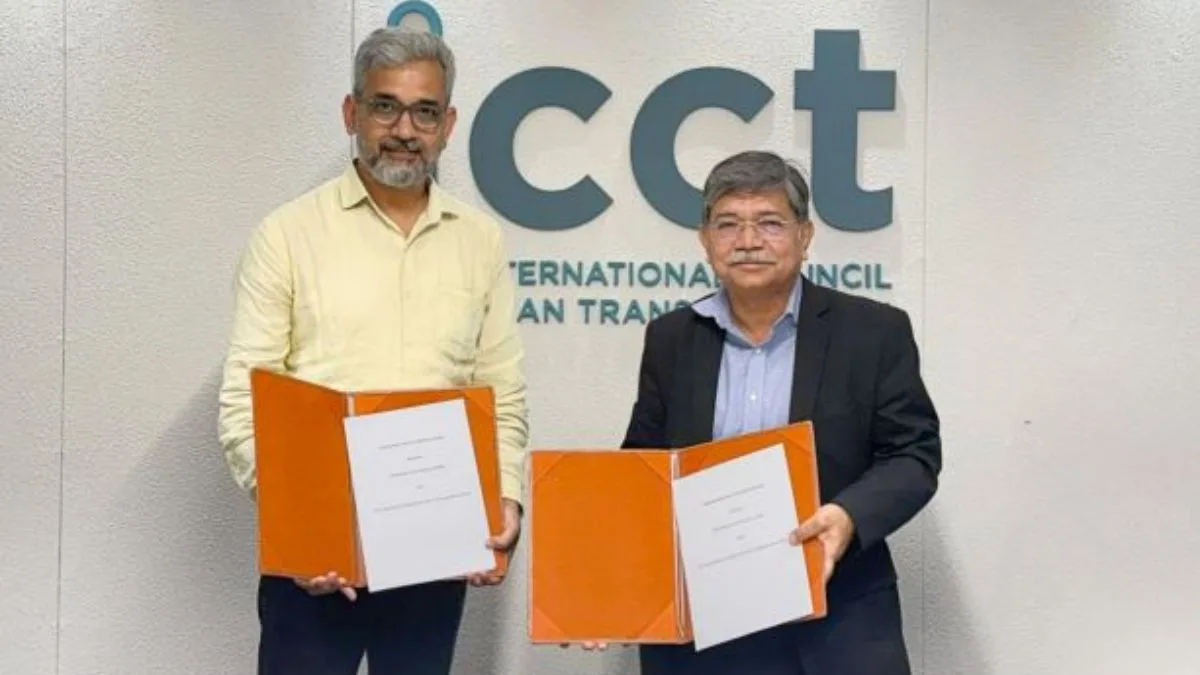
Deendayal Port Authority (DPA) and the International Council on Clean Transportation (ICCT) on Wednesday, April 29, signed a memorandum of understanding to research and develop strategies aimed at reducing greenhouse gas and air pollution emissions from port and shipping operations at Gujarat’s Kandla.
Signed in the national capital, the agreement is focused on research, policy development and knowledge-sharing for supporting low-emission, sustainable shipping practices, while combining ICCT’s technical expertise with DPA’s operational experience.
Advertisement
Among the key focus areas of the agreement include:
1. Understanding the decarbonisation measures that could have greatest emissions impact.
2. Identify practical opportunities across ships, fuels, pro-linked trucking as well as in-port equipment.
3. Assess key infrastructure, policy and regulatory changes required to make these measure viable at scale.
“Ports and shipping are critical to global trade, but they are also a significant source of greenhouse gas emissions and air pollution. Through this partnership with Deendayal Port Authority, we will identify practical, high-impact solutions, from cleaner marine fuels to electric trucks and zero-emission port equipment that can substantially reduce emissions while enhancing operational efficiency. Our goal is to help Kandla emerge as a leading model for sustainable, future-ready port development in India,” said Amit Bhatt, India Managing Director, ICCT.
Sushil Kumar Singh, Chairman, Deendayal Port Authority, said Kandla has long been a “gateway for India’s maritime trade.”
“Our partnership with ICCT will help accelerate Deendayal Port’s transition into a future-ready, green port by combining our operational expertise with ICCT’s global technical knowledge. Together, we will identify practical, cutting-edge solutions across vessels, cleaner fuels, cargo handling, and hinterland transport to significantly reduce emissions and improve efficiency,” Singh said.
The DPA Chairman added that the collaboration will enable Deendayal Port to “adopt the technologies and strategies needed to emerge as a leading model for sustainable
port development in India and beyond.”
Additionally, the collaboration aims at examining key policy, regulatory, and market mechanisms required to support the transition to low and zero-emission port and shipping systems.